The expert should know which device you clicked.
Why local BAS specialists need system context, useful tools, and a place in the technician’s existing workflow.
FROM THE FIELD. INTO THE CODE.
I’m Russ. I put AI to work in building automation. Engineering tools. Field notes. Developing local experts for the systems behind the screen.
CONTROLS ENGINEER / AI BUILDER / @FSTACKED
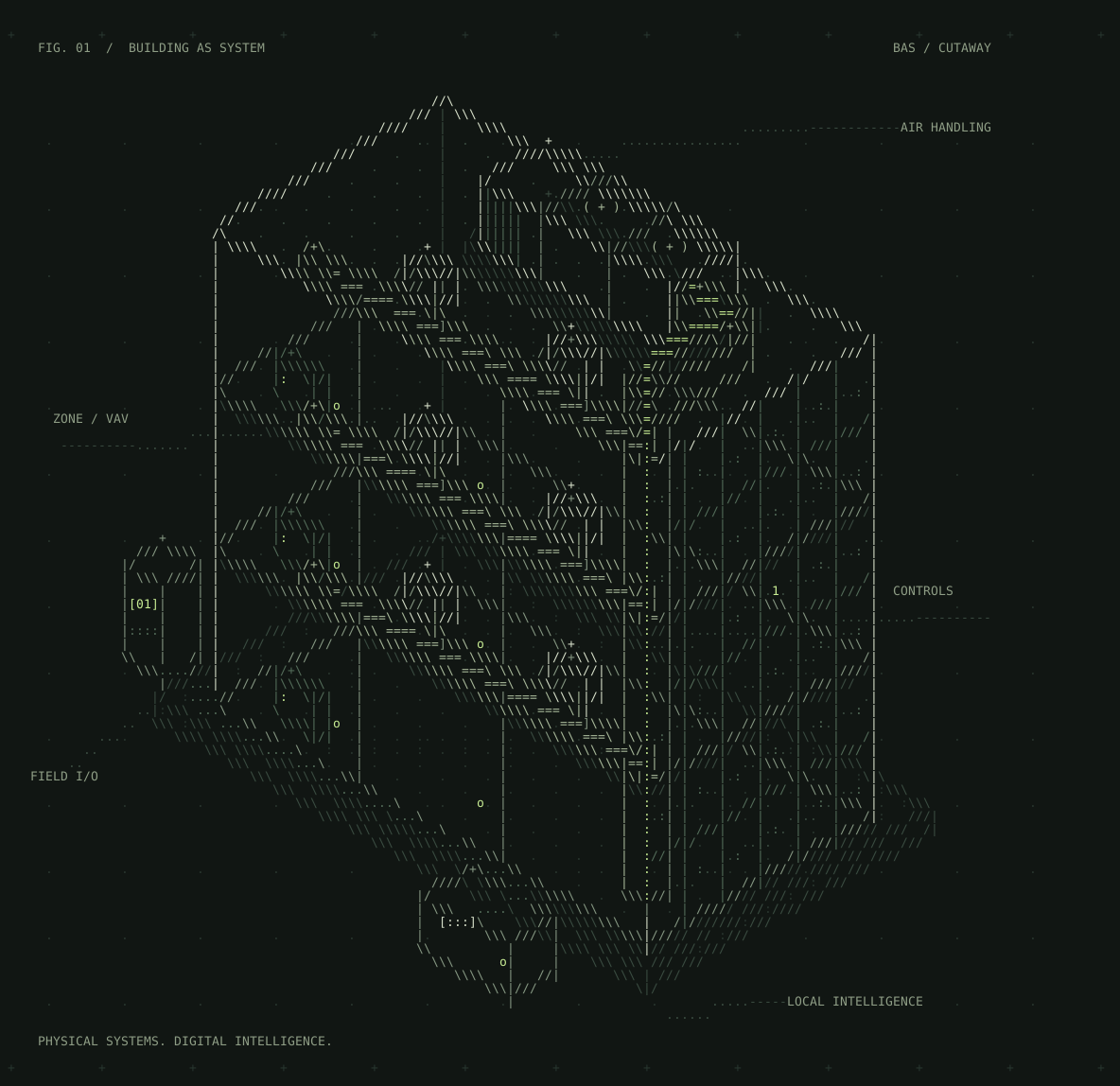
01 THE WORK
AI earns its place when it helps with the actual job. This is where I share the tools, questions, and experiments behind that work.
Station analysis, documentation, diagnostics, and the practical work of putting AI into a controls workflow.
Technical notes on what works, what falls apart, and what I’m building next.
Developing focused local models that can work with building context, right where the engineer needs them.
02 LOCAL EXPERTS
I’m developing focused subject-matter experts that can work with the technician’s existing tools, using building context and compute kept on site.
Inside the local expert programDevice discovery. Communication faults. Configuration. The next check that actually moves the job forward.
Follow the research as the models and integrations take shape.
03 THE FIELD NOTES
Why local BAS specialists need system context, useful tools, and a place in the technician’s existing workflow.
A local model is only one part of an offline BAS assistant. The entire declared workflow has to survive without public internet access.
A synthetic BACnet dropout scenario shows how a useful diagnostic answer separates observations, hypotheses, and the test that comes next.